Contents · 7 of 15
- Introduction to Product Strategy Playbook
- Why use the Product Strategy Playbook?
- About the Product Strategy Framework
- Pillar One — The Customer
- Pillar Two: The Product
- Pillar Three: The Company
- Pillar Four: The Competition
- Real-life Example: Kijiji Autos Mobile App
- Assessing your Results
- Entering the Market
- The Death of the MVP
- Putting it into Practice
- Conclusion
- About the Author
- About Product Faculty
Chapter 6
Pillar Four: The Competition
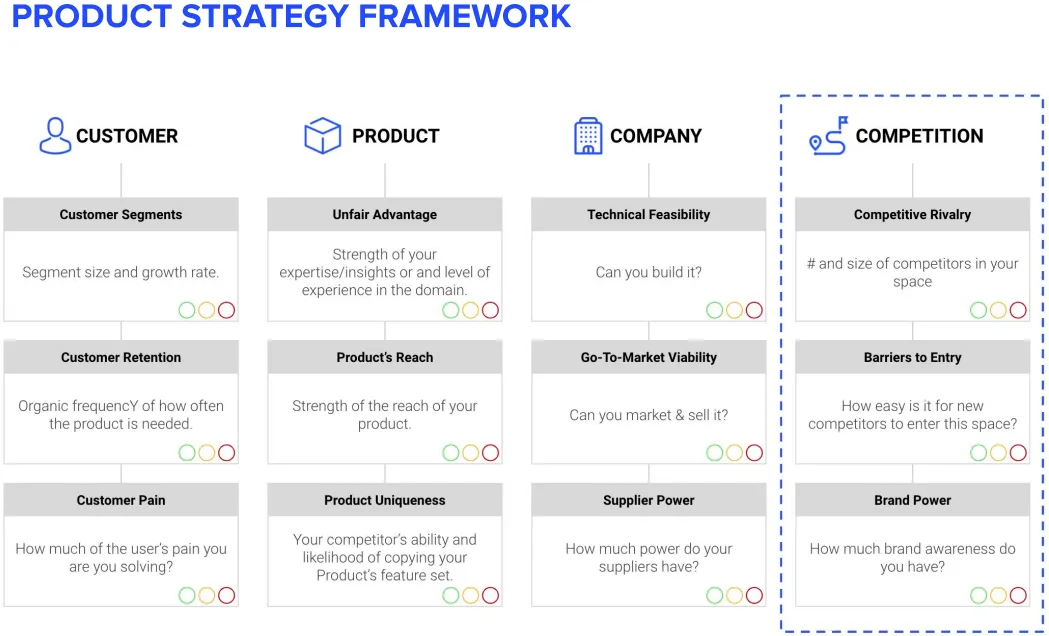
The final Pillar in the framework is the Competition Pillar. There are 3 elements within the Competition Pillar that you must evaluate:
- Competitive Rivalry
- Barriers to Entry
- Brand Power
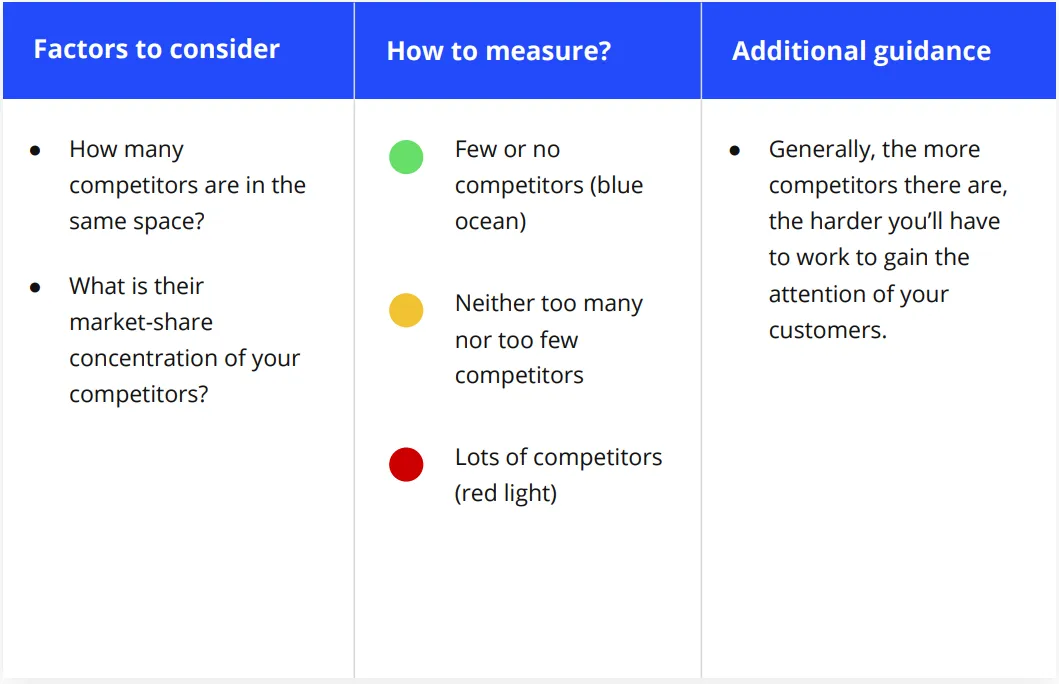
Competitive Rivalry
Overview
The focus of this element is to evaluate the number and size of your competitors.
Why is this important?
The more competition you have, the harder it will be for you to acquire customers. If you’re in a very competitive market, it’s very important for you to have clear differentiation through a focus on market positioning.
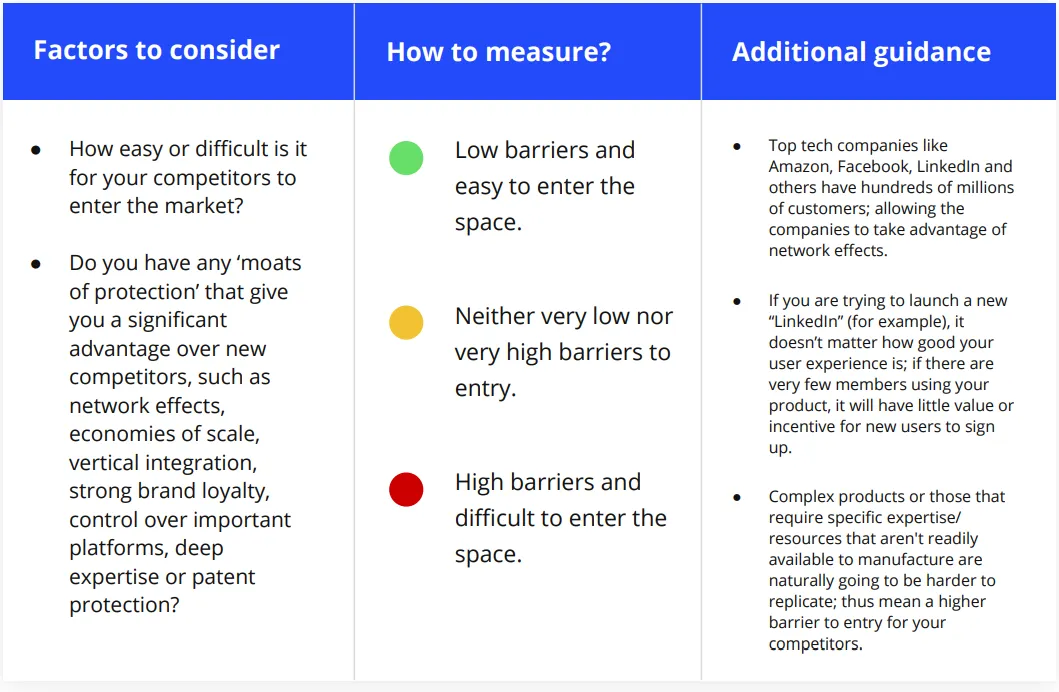
Barriers to Entry
Overview
The focus of this element is to evaluate how easy it is for your competitors to enter the market.
Why is this important?
Barriers to entry can give you an initial advantage. If the barriers to entry are high, it’ll be difficult for competitors to enter your market; therefore, you can launch with a ‘more imperfect’ product.
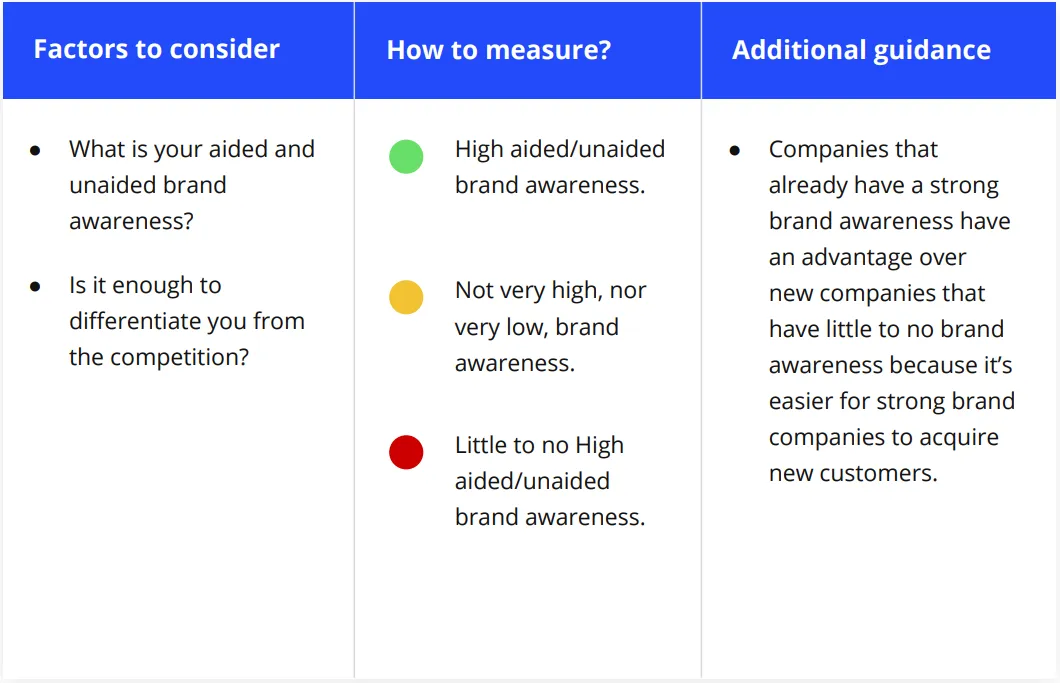
Brand Power
Overview
The focus of this element is to evaluate your level of brand awareness.
Why is this important?
In the long-run, investments in brand can give you a significant strategic advantage because it lowers the cost of acquiring new customers (CAC).
Get a copy of this playbook in PDF format.
Prefer to keep this playbook handy for future reference, save it to your desktop, or read it offline?
Enter your email and get a copy.